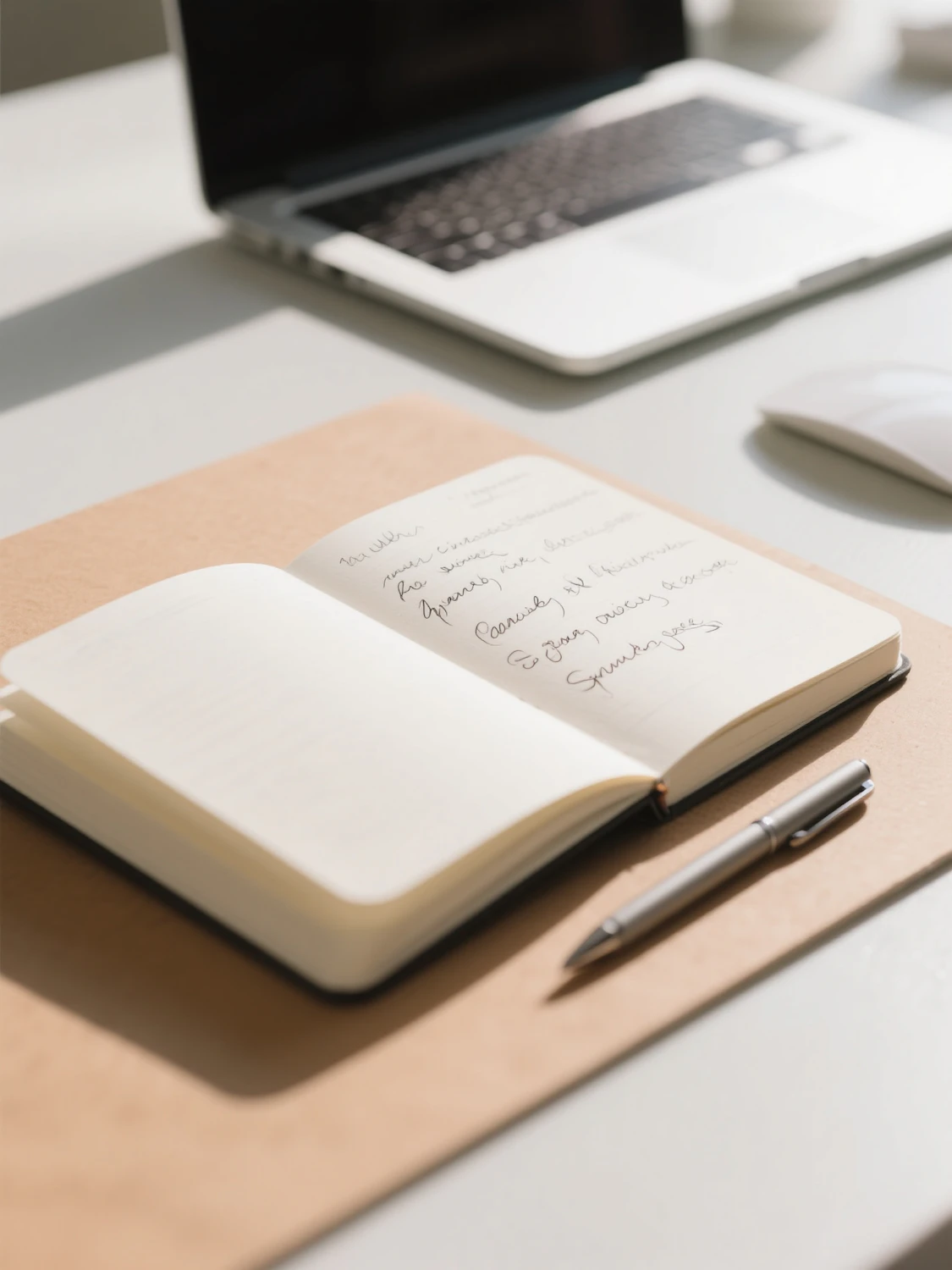
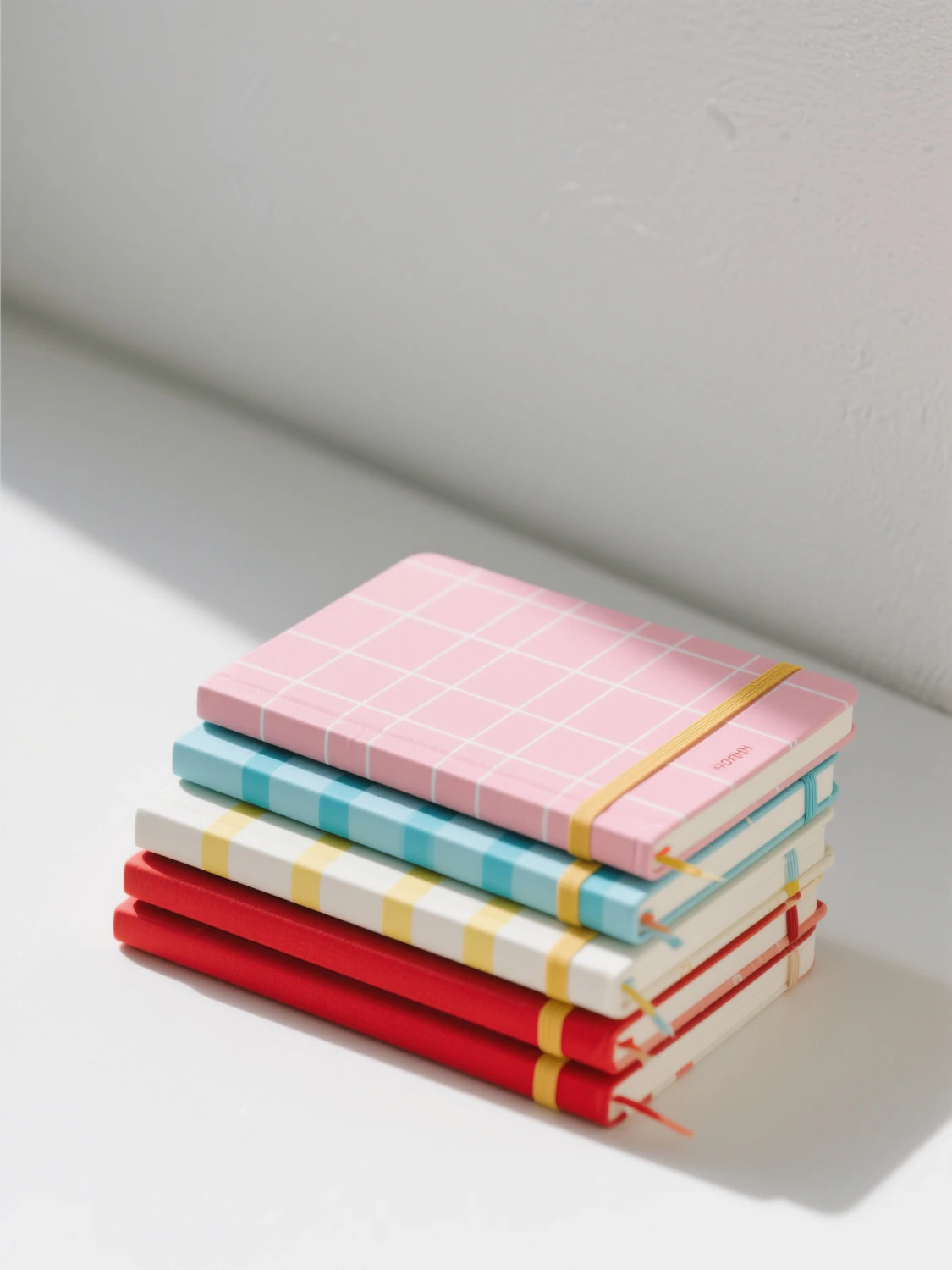
I have a shelf of beautiful, mostly empty notebooks. Each one was bought with intent. Each one has between four and nine used pages, then a clean run of paper to the back cover. Four of them are full, and those four are the only ones I still reach for.
What the finished ones had in common
They were cheap. Not disposable, but cheap enough that ruining a page cost nothing emotional. The expensive ones stayed empty because every page felt like it needed to earn the paper.
They were also single-purpose. The full notebooks were each about one thing: a project, a house move, a year of reading. The empty ones were all going to be about everything, which in practice means nothing gets written because nothing quite belongs.
A notebook with a subject fills itself. A notebook without one becomes a museum of good intentions.
The thirty-six taught me something too
Abandoned notebooks are an honest record of what I thought I would care about. Read together they are almost a diary of enthusiasms: three weeks of bookbinding, a fortnight of learning chess openings, one memorable afternoon of bee-keeping research. I do not regret any of them.
- Date the first page. It turns an abandoned notebook into a dated artefact rather than a failure.
- Never start on page one. Starting in the middle removes the ceremony, and ceremony is what kills notebooks.
- Carry one, not three. The choice of which book to write in is where the thought escapes.
The shelf is not a graveyard. It is just a very slow filing system.